Our History
The World's Greatest Coach
Arthur Lydiard1917 – 2004Auckland, New Zealand
Arthur Lydiard was a legendary figure in the sport of running. One of the greatest coaches in the world, he helped popularise running as the commonplace sport it is today. His method of coaching transformed endurance training, and is attributed as the foundation of modern-day coaching methods.
The experiment
He worked it out on himself, first.
A keen runner who used his own body as the laboratory
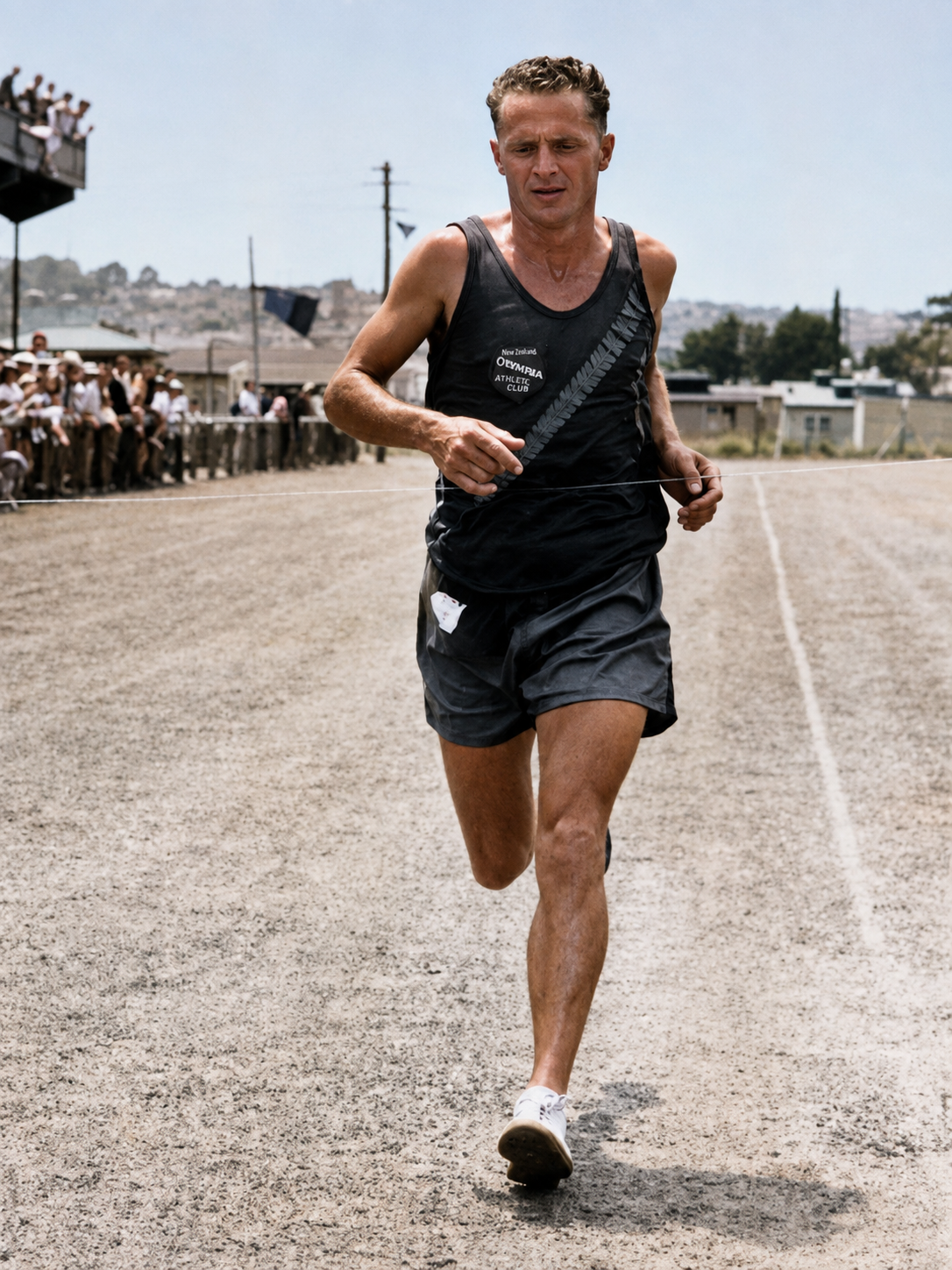
A native of New Zealand, Lydiard experimented on himself using different training types. He discovered that when he balanced distance with speedwork, not only did his marathon times improve — so did his track times.
Those experiments let him unravel the fundamentals of conditioning, and he completed his recipe for training in the 1950s. By then he knew how to mix marathon-type mileage with hill work, leg speed work, sprint training, sharpening and freshening.
Arthur then turned his sights to coaching, adapting these sessions to meet the needs of different athletes so they could peak for key races.
Distance built the engine. Everything else was learning when to let it run.
From the archive
Owairaka to the world.
The lineage
Owairaka to Barcelona, one unbroken line.
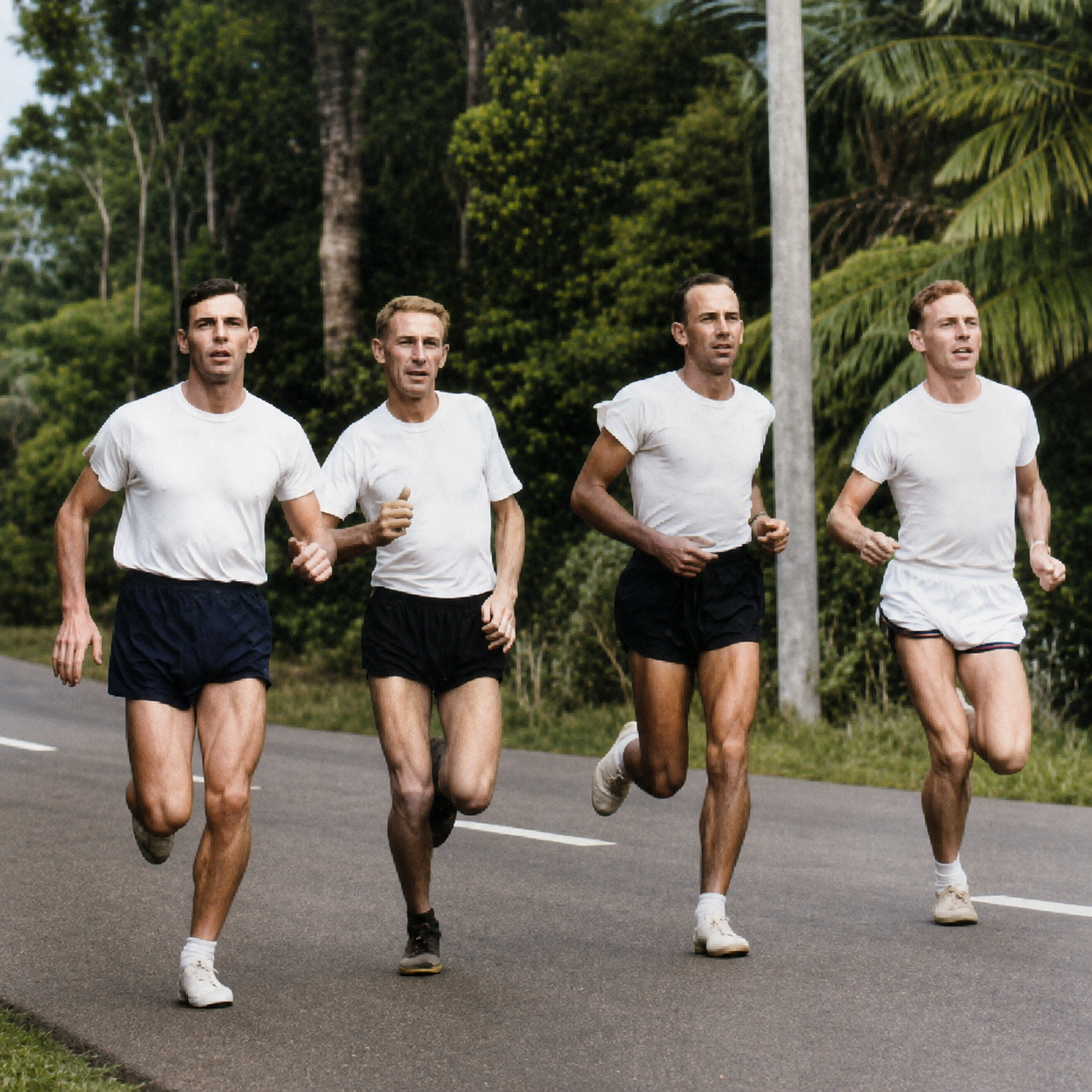
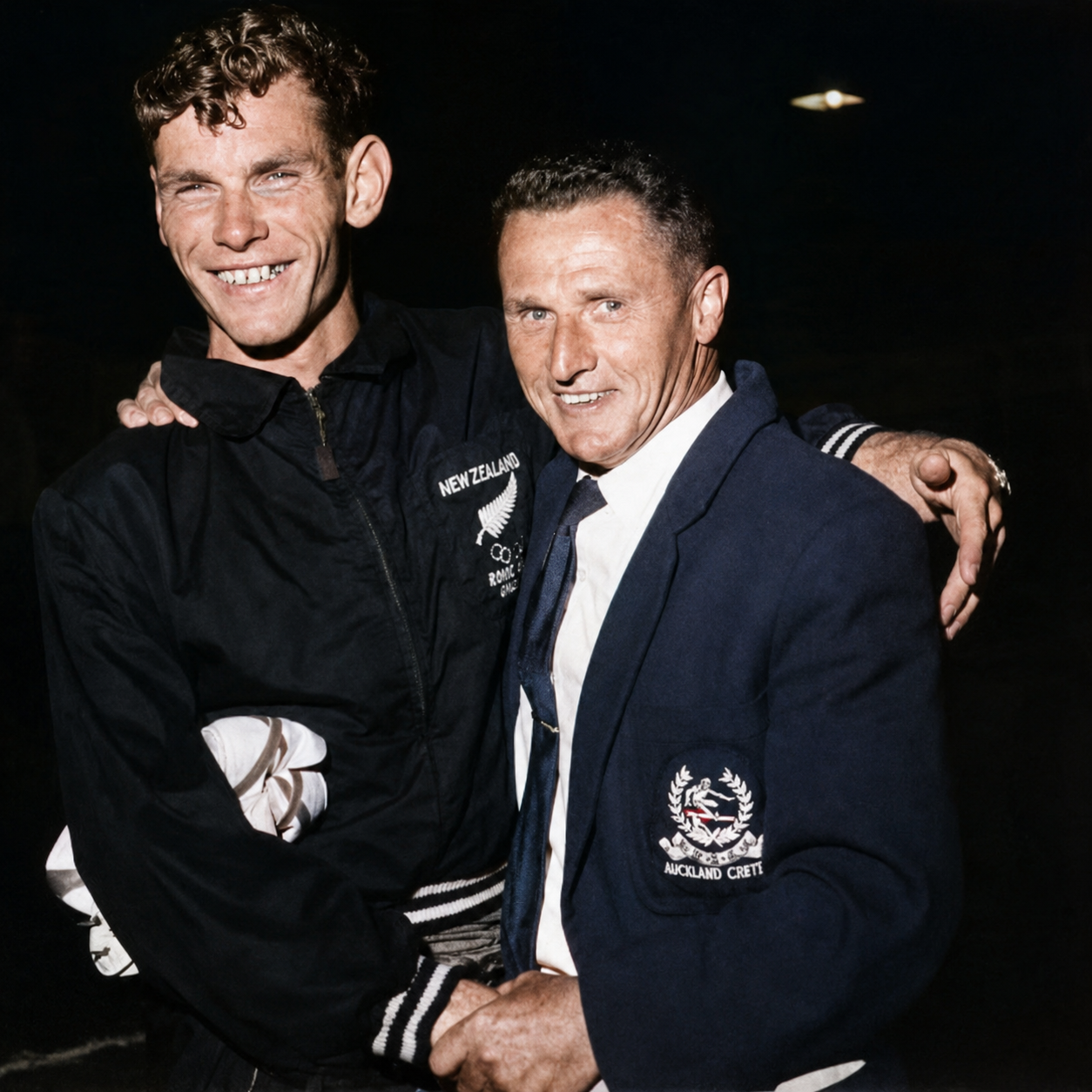
Lydiard's first students were young men from his own Auckland suburb of Owairaka who, without exception, rose to national and international prominence. What follows is what the method produced — and, just as tellingly, who passed it on.
-
1960 Rome
Generation one — Owairaka
Lydiard's first students were young men from his own Auckland suburb. Without exception they rose to national and international prominence.
- Peter Snell 800m Coached by Arthur Lydiard
- Murray Halberg 5000m Coached by Arthur Lydiard
- Barry Magee Marathon Coached by Arthur Lydiard
-
1964 Tokyo
The double
Snell became the first man since 1920 to take the 800m and 1500m at the same Games.
- Peter Snell 800m Coached by Arthur Lydiard
- Peter Snell 1500m Coached by Arthur Lydiard
- John Davies 1500m Coached by Arthur Lydiard
-
1972 Munich
The method travels
Four years after working with Lydiard in Finland, the coaches of Viren and Vasala had put his ideas to work.
- Lasse Viren 10,000m — world record Finland, via Lydiard's Finnish clinics
- Lasse Viren 5000m Finland, via Lydiard's Finnish clinics
- Pekka Vasala 1500m Finland, via Lydiard's Finnish clinics
- Rod Dixon 1500m Coached by his brother, John Dixon
-
1976 Montreal
Second generation
Now Lydiard was coaching the coaches — and one of his own bronze medallists was producing medallists of his own.
- John Walker 1500m Coached by Arch Jelley
- Dick Quax 5000m Coached by John Davies
-
1981 Boston · New York · Atlanta
The women on the world stage
Three Lydiard-trained Kiwi women performed with distinction abroad. Allison Roe's phenomenal 1981 campaign took in the Peachtree Road Race, the Boston Marathon, and a world best in New York. Through the 1980s Anne Audain took gold and silver at the Commonwealth Games and became a prolific winner on the American roads.
- Allison Roe Boston Marathon Winner
- Allison Roe New York City Marathon World best
- Anne Audain Commonwealth Games Plus silver, and a decade of road wins in the USA
-
1992 Barcelona
Third generation
Coached by a Lydiard athlete who had himself been coached by a Lydiard athlete — the line runs unbroken from Owairaka.
- Lorraine Moller Marathon Coached by Dick Quax
Proof and reach
Intuition first. The science caught up.
He gave the method away rather than guarding it
Lydiard's approach was both intuitive and practical, but he later worked with physiology and sports medicine experts to establish the scientific reasons behind his success. He made his methods available to everyone and travelled extensively, spreading the word on correct training.
In the 1960s he began influencing other coaches around the world — working with Bud Winter in Mexico, and spending time in Finland, where the coaches of Lasse Viren and Pekka Vasala implemented his ideas.
The system has since been applied well beyond the track:
- Rugby
- Cycling
- Canoeing
- Triathlon
- Ice skating
- Rowing
- Squash
Running for health
Then he sent it out to everybody else.
Heart patients who went on to run marathons
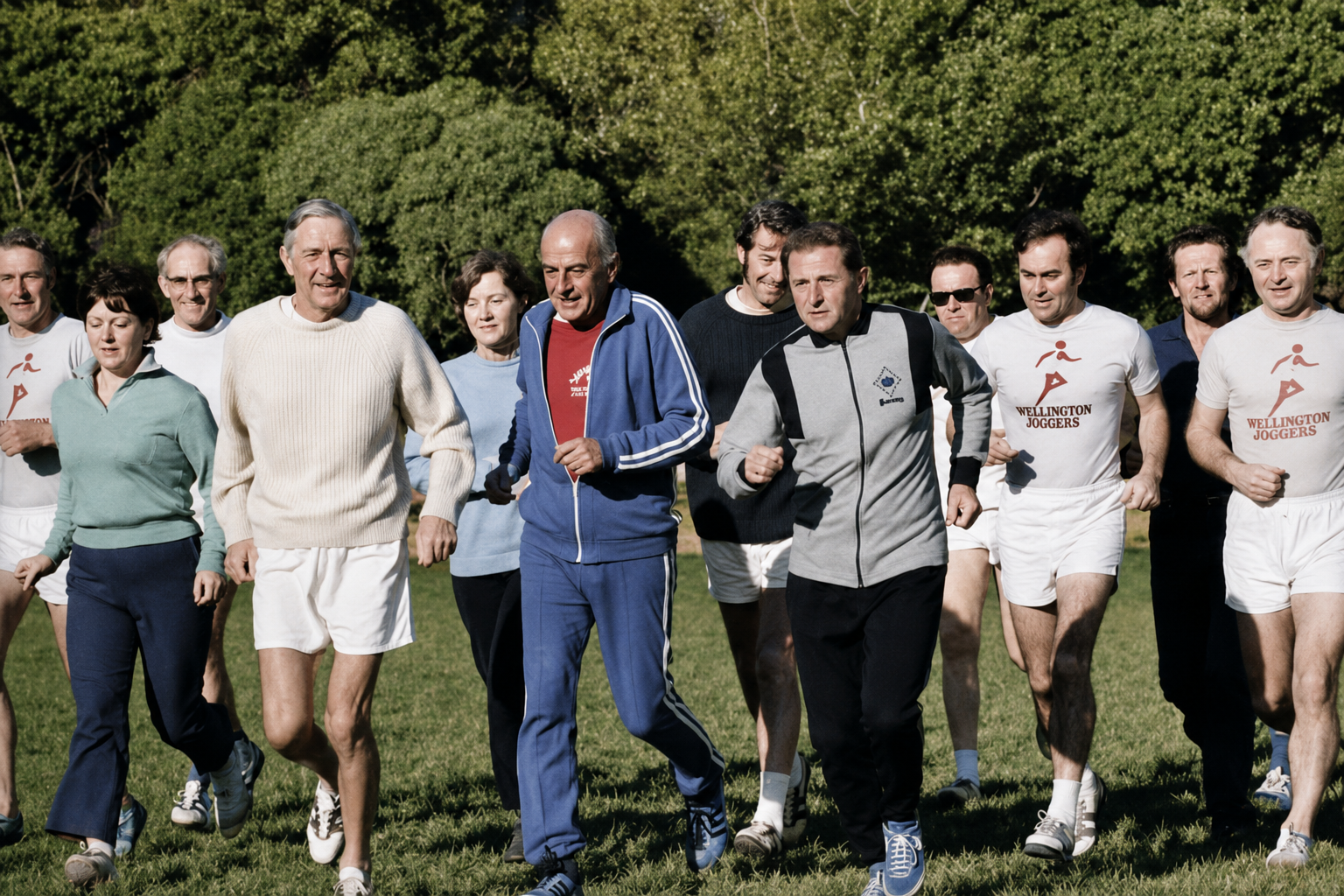
Lydiard was a strong promoter of running for health, and was asked to train a group of heart patients in Auckland with easy distance running. Many of those patients went on to run marathons.
The famous American coach Bill Bowerman visited Lydiard and took the new jogging approach back to the USA in the 1970s.
With that, the worldwide running boom was born.